Opening Hours: Monday - Friday 08.30 - 17.00 · Saturday - 09.00 - 12.00
Call Us Anytime 5944 6332 · WhatsApp us · Email Us: enquiry@delo-so.com
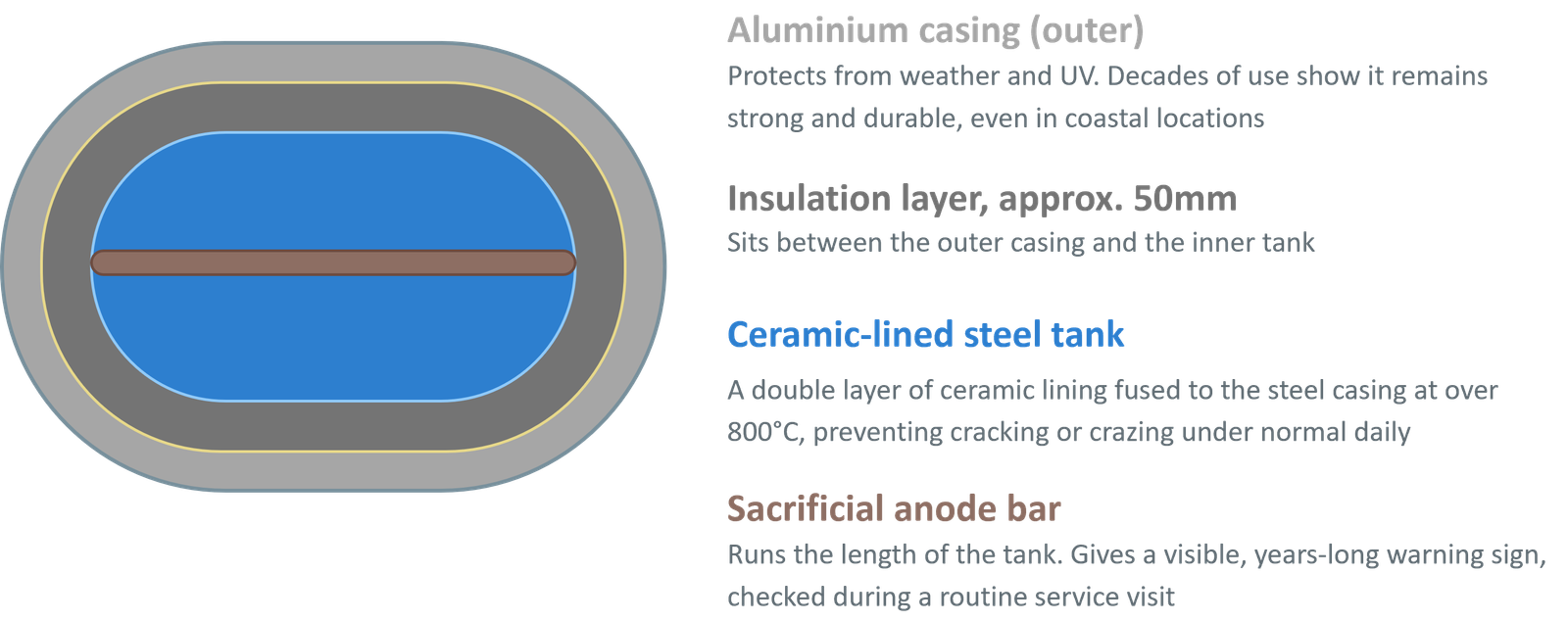
Every Solahart residential tank has a sacrificial anode bar built in, from the L Series and split systems to Sunheat and the Atmos Eco heat pumps. It is a small part doing a big job.
What it is
The anode bar is a replaceable metal rod that runs the length of the tank.
Think of it as your system’s built-in bodyguard: it attracts corrosion so the tank does not have to. Over the years the anode wears away instead of the tank.
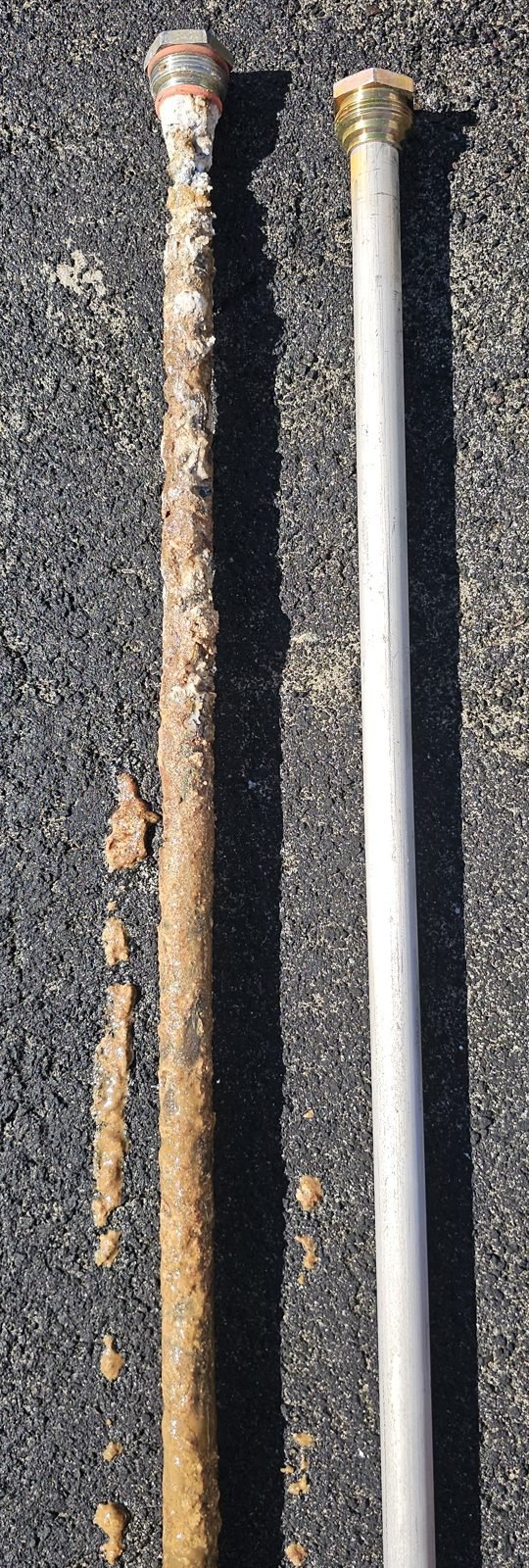
Compare a 10 year old corroded anode bar with a brand new one.
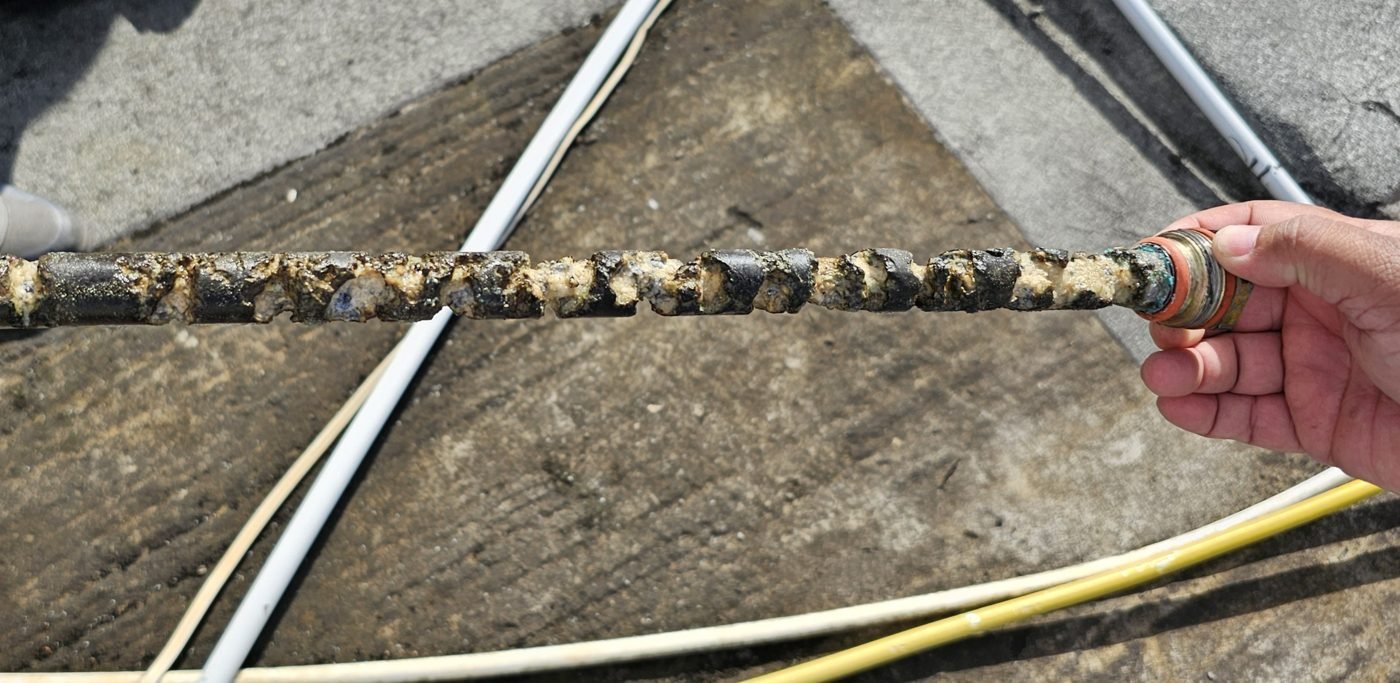
The corroded anode bar up close.
Why it matters
Hot water tanks work hard every day, and even a good lining, such as Solahart’s Super-Shield enamel, can develop small flaws over time. The anode bar sacrifices itself by attracting harmful minerals in the water supply, so the tank does not have to, thereby providing long-term protection, even if the steel gets exposed.
Because the anode wears away slowly and visibly, it gives a years-long warning sign long before the tank is at risk, while there is still time to act. A quick check during a routine visit is all it takes.
Stainless steel tanks
Properly specified 316 grade stainless steel, of adequate wall thickness, is a sound tank material in its own right. Before you rely on it, ask three things: is it really 316, how thick is the wall, and what about the welds? Ask for the answers in writing.
A Solahart tank is protected twice: by its enamel lining and by a serviceable anode bar that wears visibly and can be checked and replaced.
How often it is checked and replaced
Every year
We inspect the anode every year under our annual service plan.
When worn
We replace it when it is worn. Solahart requires inspection at least every five years. The anode is a small, low-cost part, billed to the customer after the first five years.
It is a small, routine maintenance item that protects the much larger investment in the tank.
A tank with nothing to check
No anode, no warning
A tank with no serviceable anode gives you nothing to check and no warning before it fails.
Questions to ask any supplier
“Is there a serviceable anode, does it run the full length of the tank and how often is it checked?”
If the answer is that there is nothing to check, you know what you are buying.
“If the tank is stainless steel (inox), is it solid 316 grade, what is the wall thickness, and will they certify that in writing?”
If they cannot certify it, you know what you are buying.